
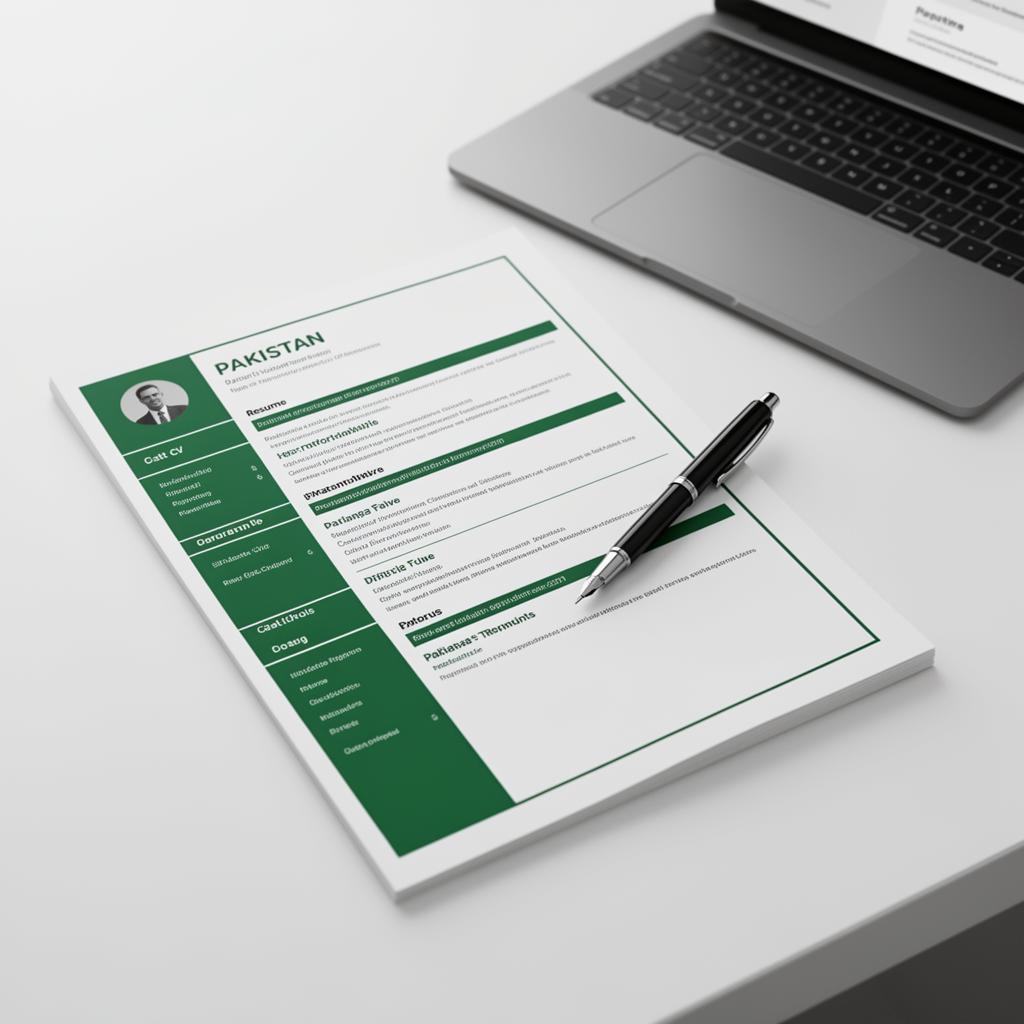
Most Pakistani graduates spend hours on their CV and still do not hear back from employers.
The reason is almost never their qualifications. It is the CV itself.
Pakistani recruiters receive dozens to hundreds of applications for every role. Many software houses now use Applicant Tracking Systems (ATS) that scan your CV before a human even reads it. A poorly formatted CV gets filtered out automatically. A well-built one gets you the interview.
This guide tells you exactly what to include, what to remove, how to format it, and what Pakistani employers and ATS systems are actually looking for in 2026.
What This Guide Covers
- The difference between a CV and a resume (and which one Pakistan uses)
- ATS: what it is and why it matters for your job hunt
- The correct CV format for Pakistan in 2026
- Section-by-section breakdown with examples
- What to include as a fresh graduate with no experience
- Common Pakistani CV mistakes that kill your chances
- CV tips for software houses vs government jobs vs remote international roles
- Free tools to build your CV today
CV vs Resume: Which One Does Pakistan Use?
Short answer: Pakistan uses both terms interchangeably. What you actually need is closer to a resume.
In most of the world, a CV (Curriculum Vitae) is a long, comprehensive academic document used in academia and research. A resume is a short, targeted document used for job applications.
In Pakistan, people say "CV" but they mean a 1 to 2 page professional document. That is what this guide covers. When a Pakistani employer says "send your CV," they want a clean, focused, 1 to 2 page document. Not a 6-page academic history.
The ATS Problem Nobody Warns You About
Over 98% of Fortune 500 companies use Applicant Tracking Systems. Pakistani software houses and multinationals operating in Pakistan increasingly use them too.
An ATS is software that scans your CV before any human sees it. It looks for specific keywords, checks your formatting, and ranks you against other applicants. If your CV does not pass the ATS scan, it gets rejected automatically.
What ATS systems check:
| What ATS Looks For | What Fails the Scan |
|---|---|
| Keywords matching the job description | Generic summaries with no specific skills |
| Standard section headings | Creative headings like "My Journey" or "About Me" |
| Clean text formatting | Tables, graphics, text boxes, headers/footers |
| Simple fonts | Fancy decorative fonts |
| Skills listed in plain text | Skills listed as images or icons |
| .docx or PDF format | Unusual file formats |
The fix:
Use a clean, simple format with standard headings. Include keywords directly from the job description in your CV. Save as .docx or PDF. No tables, no graphics, no fancy icons.
The Correct CV Format for Pakistan in 2026
Length
| Experience Level | CV Length |
|---|---|
| Fresh graduate | 1 page |
| 1 to 3 years experience | 1 to 2 pages |
| 3 or more years experience | 2 pages maximum |
Recruiters in Pakistan spend an average of 6 to 10 seconds on the first scan of a CV. Your most important information must be immediately visible at the top.
Font and Design
- Font: Arial, Calibri, or Times New Roman. Size 10 to 12 for body, 14 to 16 for your name
- Colors: Black text on white background. One subtle accent color is acceptable (dark blue or dark grey)
- Margins: Standard 1 inch (2.54 cm) on all sides
- No photos unless specifically requested (government and some corporate roles may ask)
- No graphics, icons, or decorative elements if applying to ATS-screened roles
Section-by-Section Breakdown
Section 1: Contact Information
Put this at the very top. Keep it clean.
Include:
- Full name (larger font, bold)
- Phone number (with +92 country code if applying internationally)
- Professional email address
- City (Lahore, Karachi, Islamabad, etc.)
- LinkedIn profile URL (clean, shortened version)
- GitHub URL (for tech roles, this is non-negotiable)
- Portfolio URL (if you have one)
Do not include:
- Your full home address (city is enough)
- Father's name (outdated, remove it)
- Date of birth (not relevant for private sector)
- Marital status (not relevant)
- CNIC number (security risk)
- Religion (not relevant for private sector roles)
Common Pakistani CV mistake: Including father's name, CNIC, religion, and marital status. These are outdated conventions that take up space and can introduce unconscious bias. Remove them for private sector and international applications.
Section 2: Professional Summary
2 to 3 sentences. No more.
This is the first thing a recruiter reads. It should answer three questions immediately:
- Who are you professionally?
- What are your strongest skills?
- What are you looking for?
Bad example:
"I am a hardworking and dedicated individual who is looking for a challenging position where I can use my skills and grow professionally."
This says nothing. Every applicant writes this. It wastes the recruiter's time.
Good example (Fresh CS Graduate):
"Computer Science graduate from FAST Lahore with strong skills in React, Node.js, and PostgreSQL. Built three full-stack projects including a real-time task management app and a property listing platform. Seeking a junior developer role where I can contribute to production-grade software from day one."
Good example (Fresh Graduate, Non-Tech):
"Business Administration graduate with internship experience in digital marketing and content strategy. Managed social media accounts reaching 45,000 followers and led a campaign that increased engagement by 60%. Looking for a marketing coordinator role in a fast-moving consumer brand."
Section 3: Skills
For tech roles especially, this section must be specific and honest. Never list skills you cannot demonstrate.
Format your skills clearly:
Programming Languages: Python, JavaScript, Java
Frameworks and Libraries: React, Node.js, Django
Databases: MySQL, PostgreSQL, MongoDB
Tools: Git, Docker, VS Code, Postman
Soft Skills: Team collaboration, technical writing, problem solving
What not to do:
- Do not list "Microsoft Office" unless the role specifically requires it
- Do not list "communication skills" without evidence elsewhere in the CV
- Do not list technologies you only watched a YouTube tutorial about
- Do not use skill bars or ratings (they are meaningless and confuse ATS)
Section 4: Work Experience
Format each role like this:
Job Title | Company Name | City | Month Year to Month Year
- Achievement or responsibility written as a bullet point
- Another achievement, ideally with a number or result
- Third bullet if needed
The golden rule: write achievements, not duties.
Everyone who worked as a developer wrote code. Tell them what you built, what improved, what you delivered.
Bad bullet point:
"Responsible for writing code and fixing bugs."
Good bullet point:
"Reduced API response time by 40% by optimising database queries, cutting average page load from 3.2 seconds to 1.9 seconds."
If you are a fresh graduate with no formal work experience:
Do not leave this section empty. Include:
- University internships (even 4 to 6 week ones)
- Freelance projects (list the client type and outcome, not necessarily the name)
- Part-time or volunteer work
- University society roles (president, treasurer, event organiser)
Section 5: Projects (Critical for Fresh Graduates)
For fresh graduates in Pakistan, a strong projects section can outweigh the lack of formal experience.
This is your most powerful section if you are just starting out. Pakistani software houses specifically look at projects when hiring fresh graduates.
Format each project like this:
Project Name | [GitHub Link] | [Live Link if available]
Tech Stack: React, Node.js, MongoDB
- What the project does in one sentence
- One technical challenge you solved
- Key result or feature (number of users, functionality achieved, etc.)
What makes a good project:
- Something that solves a real problem (not just a tutorial clone)
- Has a working deployment (even on a free hosting platform)
- Has clean code on GitHub with a proper README
- Shows a skill relevant to the jobs you are applying for
Aim for at least 3 projects before sending your CV to software houses.
Section 6: Education
Format:
Degree Name | University Name | City | Graduation Year
CGPA: X.X/4.0 (only include if 3.0 or above)
Relevant Courses: Data Structures, Database Systems, Web Development
Tips:
- List most recent education first
- Include CGPA only if it is strong (3.0 or above out of 4.0, or equivalent)
- Include relevant coursework if you are a fresh graduate with limited experience
- Matriculation and FSc can be listed but keep them brief
Section 7: Certifications (Optional but Powerful)
Certifications add real credibility, especially for fresh graduates. Include:
| Certification | Relevance |
|---|---|
| AWS Cloud Practitioner | Cloud, DevOps, backend roles |
| Google Associate Android Developer | Mobile development |
| Meta Front-End Developer Certificate | Web development |
| Google Digital Marketing Certificate | Marketing roles |
| DigiSkills Certificate | Entry-level freelancing and digital roles |
| Coursera / edX verified certificates | Any relevant technical skill |
List them as:
Certification Name | Issuing Organisation | Year
Section 8: What to Leave Out
These sections add length without adding value:
| What to Remove | Why |
|---|---|
| Hobbies (generic ones) | "Reading, cricket, travelling" tells recruiters nothing |
| References | "Available upon request" wastes space. Remove entirely. |
| Objective statements | Replace with a professional summary |
| High school details (if you have a degree) | Not relevant once you have university education |
| Father's name and CNIC | Outdated. Remove for private sector roles. |
| Passport details | Not needed at CV stage |
| Photo | Not required unless specifically asked |
Pakistani CV Examples: Three Different Profiles
Fresh CS Graduate Applying to a Software House
Order of sections:
- Contact Information
- Professional Summary
- Skills (technical skills first)
- Projects (this is your experience)
- Education
- Certifications
- Internships (if any)
Why projects come before education: Pakistani software houses hire fresh graduates based on what they can build. Your university name matters less than whether you have shipped something real.
Fresh Business Graduate Applying to a Corporate Role
Order of sections:
- Contact Information
- Professional Summary
- Education (CGPA matters more here)
- Work Experience / Internships
- Skills
- Certifications
- Projects or Extra-Curriculars
Why education comes higher: Corporate and banking recruiters in Pakistan weight university name and CGPA more than tech companies do.
Applying for a Remote International Role
Order of sections:
- Contact Information (include LinkedIn and GitHub)
- Professional Summary (written for international audience)
- Work Experience
- Skills
- Projects (with live links)
- Education
- Certifications
Key differences for international CVs:
- Remove father's name, CNIC, religion, marital status entirely
- Add city and country (Lahore, Pakistan) in contact info
- Include timezone availability if relevant
- Write in clear, simple English with no jargon
- GitHub profile and live project links are expected, not optional
Common Pakistani CV Mistakes That Kill Your Chances
These are the most common mistakes Pakistani CV reviewers report seeing in 2026.
Mistake 1: Too Much Personal Information
Father's name, CNIC, religion, marital status. These are unnecessary for private sector applications and waste valuable space.
Mistake 2: Using a Template Designed for Style, Not ATS
Fancy Canva templates with columns, graphics, and icons look impressive but fail ATS scans at large companies. Use a clean, single-column Word format for applications to corporate or software house roles.
Mistake 3: Generic Objective Statements
"Seeking a challenging position where I can grow" tells the recruiter nothing about you. Replace it with a specific, skills-focused summary.
Mistake 4: Duties Instead of Achievements
"Worked on web development projects" is not useful. "Built a React dashboard that reduced manual reporting time by 3 hours per week" is.
Mistake 5: No GitHub or Portfolio Link
For any tech role in Pakistan in 2026, not having a GitHub profile is a significant disadvantage. Set it up, clean it up, and put it on your CV.
Mistake 6: Lying About Skills
Pakistani software houses test technical skills in interviews. If you list a technology on your CV, expect to be questioned on it. Only list what you can actually demonstrate.
Mistake 7: Sending the Same CV to Every Job
Your CV should be customised for each role. At minimum, adjust your professional summary and skills section to match the keywords in the job description.
CV for Government Jobs in Pakistan
Government job applications in Pakistan work differently from private sector ones:
- Most government roles require you to fill an official application form (not just submit a CV)
- If a CV is requested alongside the form, keep it formal and straightforward
- Include personal details like CNIC and date of birth (government forms require these)
- University name and CGPA carry significant weight
- List all qualifications including Matriculation and FSc
- References are often required with contact details
Free Tools to Build Your CV Today
You do not need to pay for a CV builder. These are free and work well:
| Tool | Best For | Link |
|---|---|---|
| Microsoft Word | Clean, ATS-friendly format | Built into Windows |
| Google Docs | Free, accessible anywhere | docs.google.com |
| Canva (simple templates) | Visually clean but check ATS compatibility | canva.com |
| Novoresume (free tier) | Modern format with ATS guidance | novoresume.com |
| Overleaf (LaTeX) | Tech and academic roles | overleaf.com |
Recommendation for most Pakistani job seekers: Use Google Docs with a clean, single-column template. It is free, easy to update, and saves in any format. For tech roles targeting international clients, a simple LaTeX template on Overleaf creates a very professional result.
Your CV Checklist Before You Send
Go through this before sending any application:
- One to two pages maximum
- Clean font (Arial, Calibri, or Times New Roman)
- Professional email address (not [email protected])
- LinkedIn URL included and profile is updated
- GitHub URL included (for tech roles)
- No father's name, CNIC, or marital status (private sector)
- Professional summary is specific, not generic
- Skills section lists real, demonstrable abilities
- At least 3 projects with GitHub links (fresh graduates)
- Achievements written with numbers where possible
- Customised for this specific job (keywords from job description included)
- Spell-checked and proofread
- Saved as .docx or PDF